Guernsey and Jersey Jug, Can, Creamer Makers
(c) Antique Metalware Society
Small extracts can be used with acknowledgements to 'Oldcopper.org' website.
Helpful comments are very welcome.
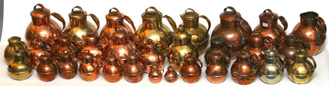
Makers and Retailers
(For simplicity the word 'jugs' is here used to cover 'cans' and 'creamers'. The jugs were dual purpose to be used as milk cans for the collection of the milk. Being so attractive, they are suitable for use at table as jugs or creamers. Channel Island 'milk' is so rich in 'cream' that those words can justifiably be confused as well.)
Originally the jugs were made by craftsmen who cut segments from flat copper sheet, hammered them to a curved shape and formed lock-seamed edges to build the can. A traditional can will have a horizontal soldered seam and up to four vertical seams forming the sphere with base, neck and lid to complete the body and handles on both the body and lid. Well made handles have supportive webs soldered inside them for added strength. Most jugs were marked underneath by their maker or vendor. As tourist demand increased it became more economic to obtain jugs made with spun hemispheres of copper joined with a horizontal lap-seam. Sometimes there are vertical ribs in the body giving some extra strength and simulating the original joints. Many of these were made by spinners in Wolverhampton, in the Black Country near Birmingham.
Many collectors have special affection for the copper cream jugs typically made in the Channel Islands, particularly Guernsey. The design is traditional, being based on the design of French milk jugs and going back about a thousand years. It has been continued on Guernsey and Jersey, islands in the Channel Island group, now popular holiday resorts. For years the jugs were used for regular deliveries of milk to local residents long after other areas had switched to the use of glass bottles.
The design appealed to visitors and during the 20th century, more jugs were made for sale to tourists. Some of the jugs made for tourists are not made by the traditional methods and not of the quality needed for regular use. Most were made in Birmingham or The Black Country and sent to Guernsey ready marked for retailers.
With the jug may go an enthusiasm for the richly creamy milk of the Guernsey and Jersey cows, herds are now also found on the mainland. Similar jugs were made on the neighbouring island of Jersey but are not do common. The Channel Islands have been part of Britain since 1066, being then part of the estate of William, Duke of Normandy.
Effective sizes of jug range from half-pint up to one gallon, occasionally more. Miniatures have been made occasionally. The standard Guernsey measure was the ‘Pot’, equivalent to about four pints or half a gallon. Cans have been made up to a five gallon size (10 pots) but three gallons (6 pots) was the maximum practical size for use.
The larger sizes are very rare. There have been several coppersmiths making them, originally for local use and then for sale to tourists. Many of the jugs have the bottom showing the maker’s mark and a number representing the capacity, either in pints or 'pots'. Many makers did not resume production after 1945 but at least one is still in business and has a website, see page below this.
Some jugs were made on the mainland and the ‘Loveridge’ mark is frequently found. Others may have been sent to the Islands pre-marked to order or unmarked so that retailers could add their own. Many of the jugs are of excellent quality and show a good age. Some are made of brass. Some made for the cheap end of the tourist trade are not of such good quality.
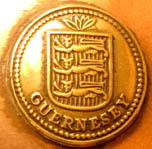 |
This stamp comes from the only coppersmith still making the jugs traditionally. It also carries the year of manufacture. Guernsey used mainly French currency until early in the 19th century. In 1830 copper coins called 'doubles' were introduced and were issued until 1956 with the 8 double coin being equal to a British penny. Each of these carried the three-lion Guensey arms on the obverse and on occasions these may be found soldered to a Guensey can. They do not often help to date the can. |
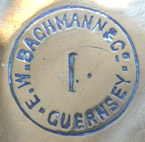 |
E W Bachmann & Co |
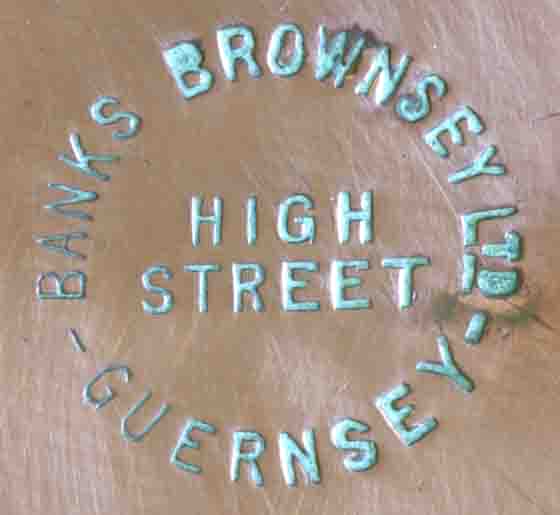 |
Banks Brownsey Ltd. Thomas Brownsort Banks moved from Wolverhampton to Guernsey in about 1888 and opened a book shop at 43 High Street, Guernsey. He went into partnership with Frank Brownsey in about 1910. Thomas Brownsey Banks was descended from the family that founded the Banks Brewery in Wolverhampton. (Many thanks to Steve Foote) |
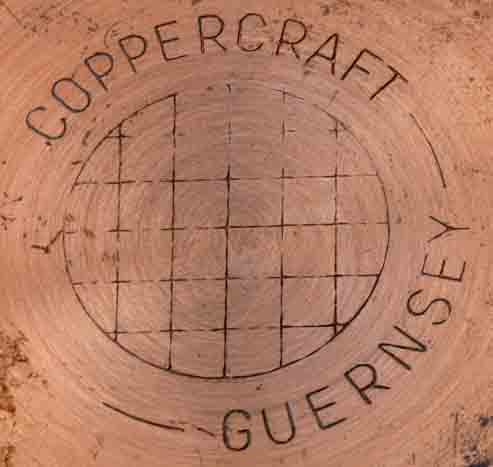 |
Coppercraft |
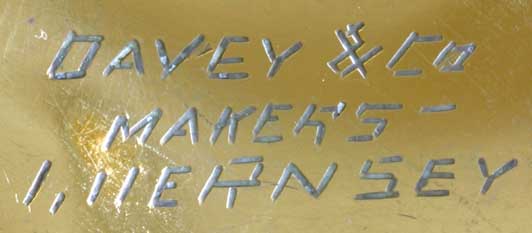 |
Davey & Co |
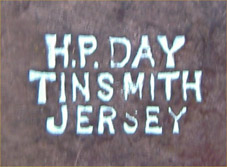 |
H P Day, Jersey. |
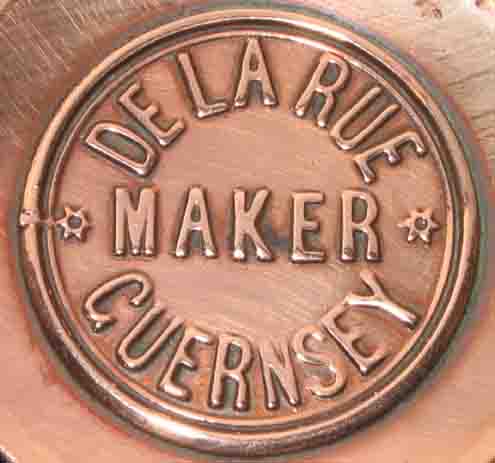 |
De la Rue |
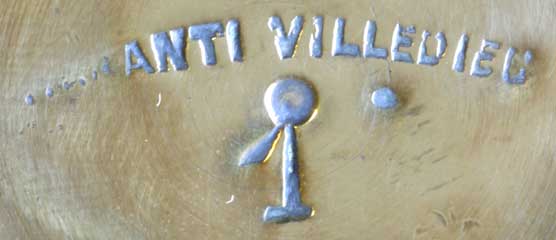 |
Guaranti-Villiedieu-les-Poules mark under a Guernsey type can originally made in Normandy, France. (French Copper) |
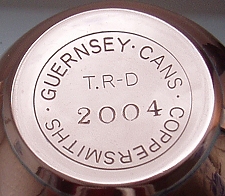 |
Guernsey Cans. Trevor Rogers-Davis produces these cans in 15 sizes from a half-pint (0.28 litres) to a 40 pint (22.73 litres). Guernsey Cans |
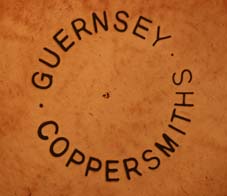 |
Guernsey Coppersmiths |
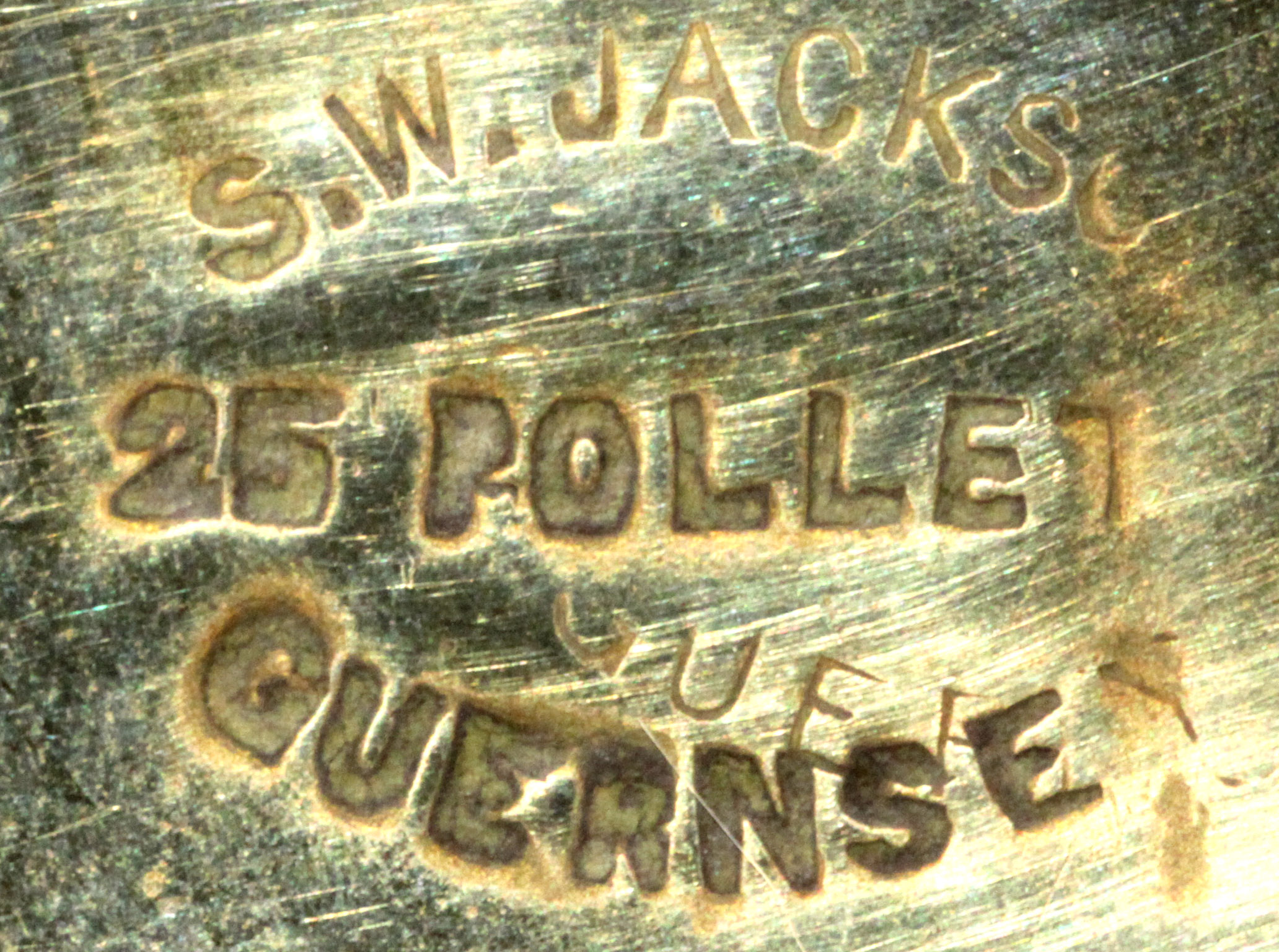 |
S W Jackson, 25, Pollet, Guernsey. |
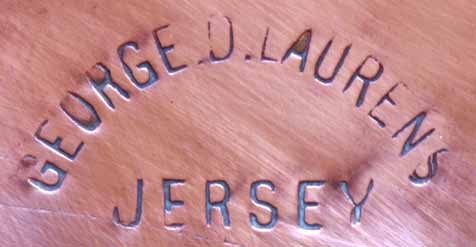 |
George J Laurens, Jersey. |
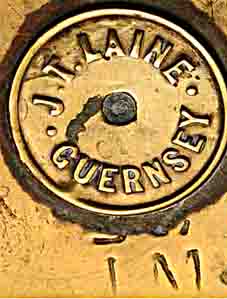 |
J T Laine, Guernsey over a can made by John Marston (JM) of Wolverhapton before 1902. |
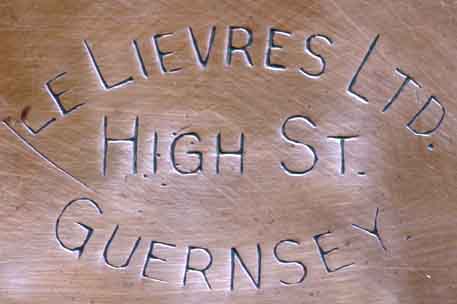 |
Le Lievres Ltd |
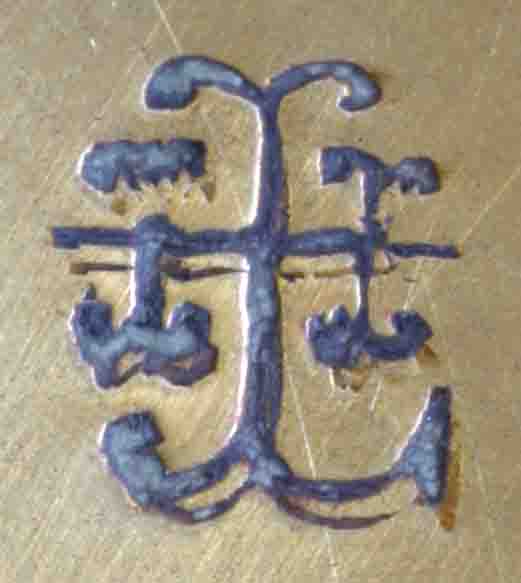 |
The simplest form of the Henry Loveridge mark from Wolverhampton. It is found on a variety of items. One example is from under a spun copper jug of the type used for tourist souvenirs instead of the true 'Guernsey' or 'Jersey' jugs |
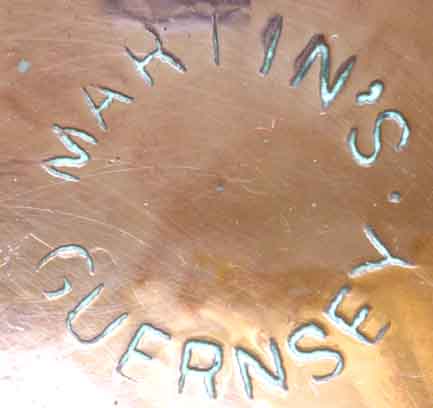 |
C A Martin. (see Guernsey-Martins history page) |
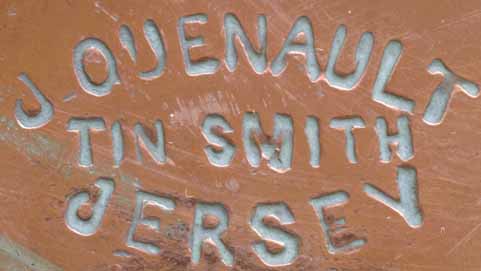 |
J Ouenault, Jersey. |
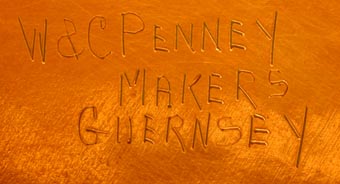 |
W & C Penny, Guernsey. |
|
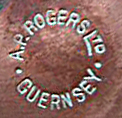
A P Rogers, Guernsey. |
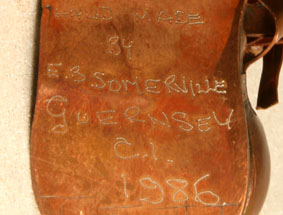 |
E B Somerville, Guernsey. |
After